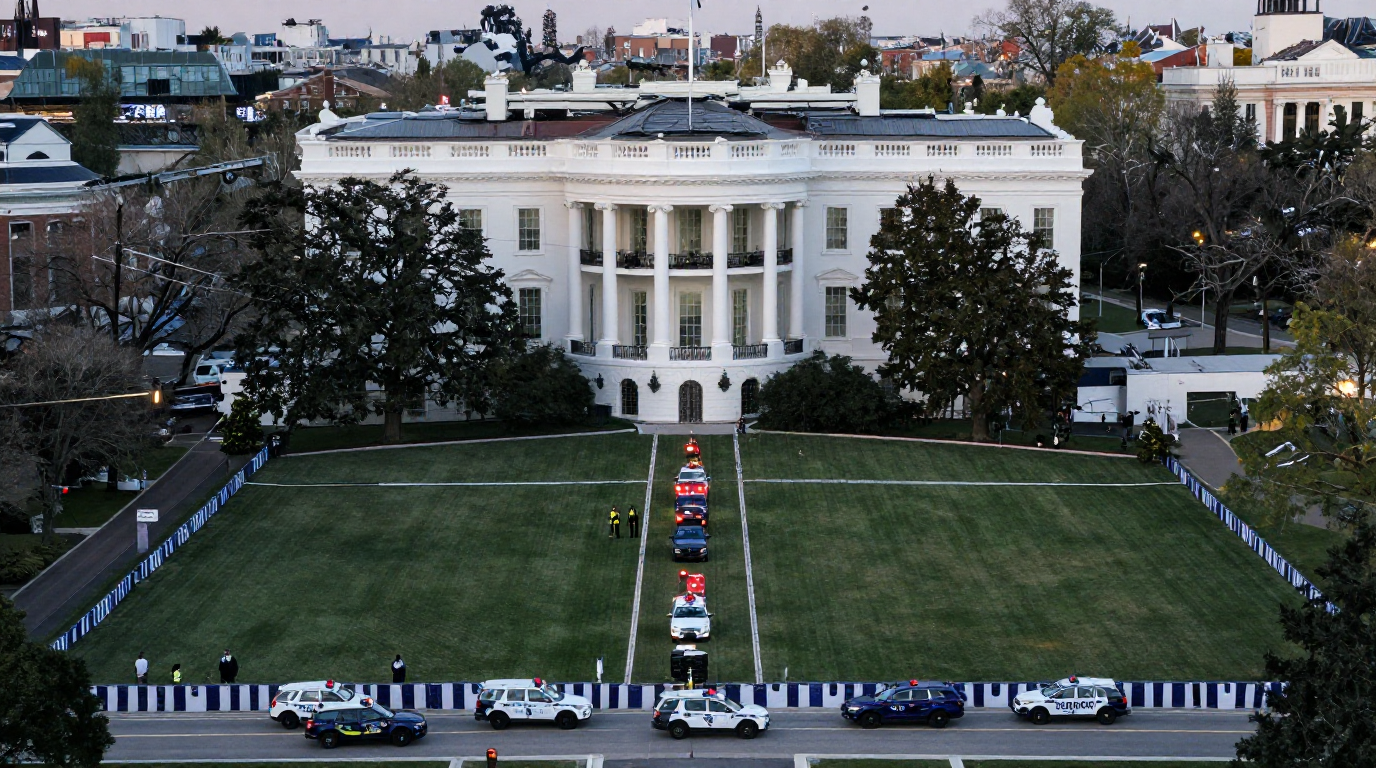
A sudden disturbance close to the White House triggered a full lock on the grounds when weapons were spotted during a clash at one entry point. Following that, agents from the Secret Service arrived fast, working alongside local officers. After everything settled, control returned to normal once the zone was confirmed safe. What exactly set it off is now being pieced together through evidence and witness accounts.
Incident Summary
A sudden disturbance broke out by a guard post just outside the White House grounds in Washington, D.C. Coming into view first was a figure walking slowly with something slung over one shoulder – eyes fixed ahead. Then came the scene: an individual drawing nearer to uniformed personnel posted at the access point, backpack in hand.
A report from police says the person pulled out a gun, then aimed shots at Secret Service agents. In response, those on site fired back. Bullets struck the man during the clash. Taken to a medical center afterward, death followed shortly after arrival.
A person nearby got hurt at that moment. Officials continue looking into how it happened, possibly caught in shots meant for others.
Immediate Security Response
Right away, when shots rang out, the Secret Service flipped into emergency mode. The moment gunfire started, agents locked down the checkpoint fast. From there, they shifted quickly to control the danger. Right after, more teams spread through the White House grounds. Their job was clear: stop anything worse from happening.
Minutes after the event, a lockdown took effect. Access to the White House area became limited, while movement out was also halted. Those indoors were told to stay put in safe spots.
Closing off nearby streets came first, then blocking public access around the zone. Movement control unfolded through joint efforts by law enforcement teams securing every entrance nearby.
Agencies Involved
Multiple agencies responded to the incident:
- Secret Service of the United States
- Federal Bureau of Investigation (FBI)
- Bureau of Alcohol, Tobacco, Firearms and Explosives (ATF)
- Metropolitan Police Department
Out front, agents moved fast to lock down the area. Following behind, federal investigators stepped in to check for broken laws. Ballistics experts arrived next, tracking where the gun came from. Nearby officers held lines around the edges, keeping people back.
Suspect Details
A young man, 21 years old, was named by police as the person they are looking for. He has crossed paths with officers before, authorities said.
Earlier run-ins show the man got held trying to reach off-limits spots by the White House grounds. Those times, officers stepped in when he pushed toward protected sections with no clearance.
Looking into his history now, investigators check old contacts with police along with noted behavior issues. Though details remain unclear, a reason for the shooting has not been released by authorities.
White House Security Setup
Security around the White House stacks up like layers. Barriers block access at key points. Cameras watch every angle without pause. Checkpoints slow movement with careful scrutiny. Armed guards stand ready throughout, always present.
Every now and then, a gate appears along the border where people must stop. Before moving farther, each person gets checked right there. Entry only happens once someone passes that moment of review.
Inside the gates, protection never sleeps. Standing guard means staying ready before trouble shows its face. Quick reactions come from careful positioning near critical spots. When danger appears, response follows without delay. Keeping leaders safe involves constant alertness across every level.
Even with these steps in place, breaches sometimes happen because people test the edges. A few push against boundaries no matter the safeguards built. Trouble shows up where someone decides to probe weaknesses. Not every defense stops those determined to get through. Moments of tension appear once a person tries to force their way past limits meant to hold them back.
Lockdown Procedure
As gunfire broke out, the building sealed shut automatically.
During the lockdown:
- Every way in or out had been shut down
- People working there plus journalists went into safe areas. Some stayed behind to lock doors. A few carried bags others held phones tight. Lights flickered once then stayed on. The hallway emptied fast after that
- Agents with weapons moved into position around the structure, covering both interior rooms and exterior zones
- Roads around the White House were blocked
Only after officials said things were stable did the restrictions lift, once it became clear there was nothing more to fear.
Law Enforcement Actions
Once the suspect was taken down, officers moved in to lock off the location. Right after, personnel trained in gathering proof arrived to photograph everything, then collect what mattered.
Footage pulled from nearby camera feeds got another look. Officers, workers, people around – each shared what they saw. One detail led to the next.
A shell casing from the scene has been collected for review. Following that, authorities began tracking where it came from and who might have held it before.
Federal agents are digging deeper into who else might have played a role – was it just one person or more behind the act? The probe continues to uncover connections, if any exist.
Status of Investigation
Finding reasons behind it still eludes those in charge. With the probe ongoing, fresh details might surface when known.
Looking into where the person went right before reaching the checkpoint is one thing officials are doing now. What happened during past run-ins with police also matters here. Messages he sent or got could help explain what followed. Each clue adds a piece without telling the whole story yet.
Fewer dangers lately around the president’s home or nearby spots. Nothing new has shown up to cause alarm there.