Introduction
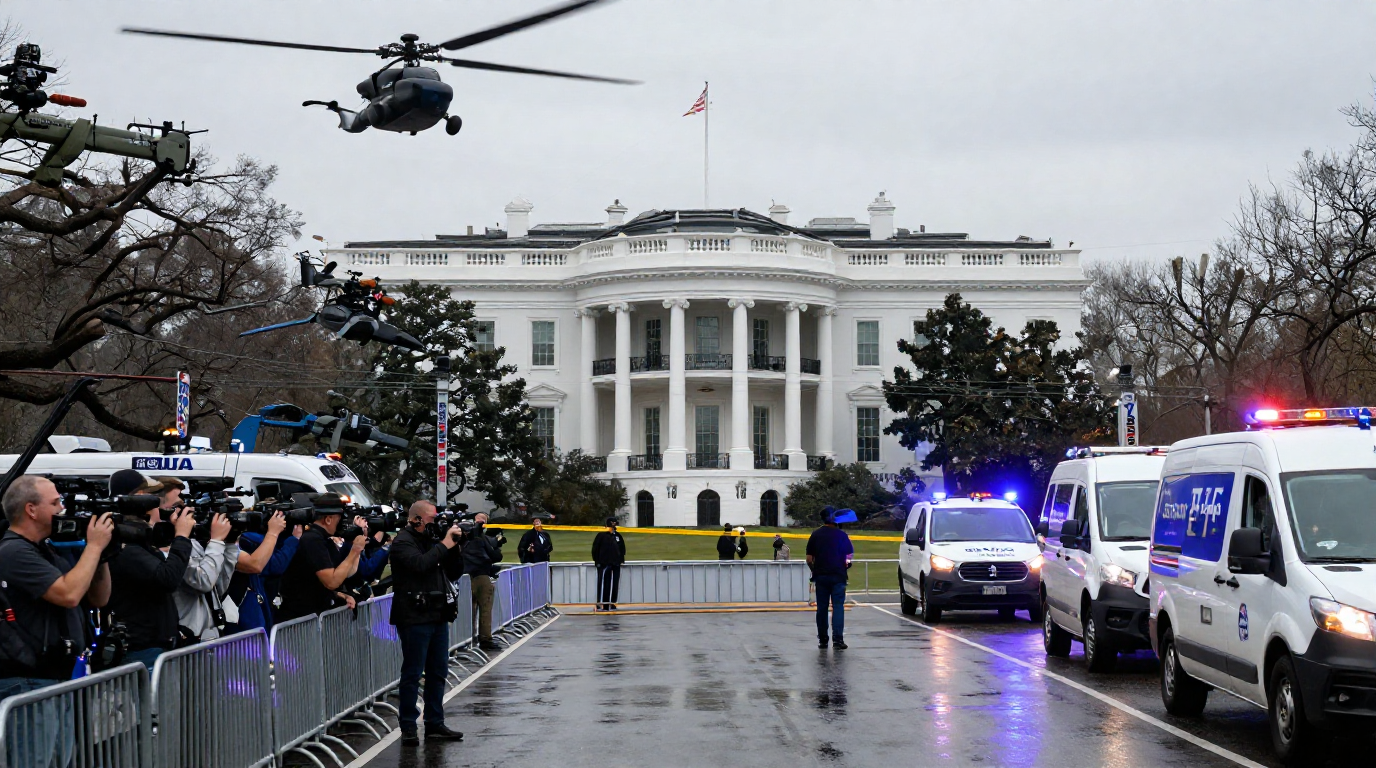
A sudden gunfire exchange unfolded close to the presidential grounds in the nation’s capital, pulling eyes worldwide. Officers guarding access points to government buildings encountered someone carrying weapons during routine screening procedures. Shots were fired after warnings went unheeded near restricted land. Federal agents moved quickly once threat levels escalated without prior notice. Details remain limited while officials review footage and witness statements. Security around high-level zones tightened immediately following the disturbance.
A figure drew close to a barrier by the White House edge, gun in hand. In response, law enforcement opened fire. Afterward, that individual ended up in medical care but did not survive. Their life concluded following treatment.
A person nearby got hurt when things went wrong. Looking into it now, authorities check where the bullet started and what led to the harm.
Fences went up near the president’s home when officers arrived on scene. With local police working alongside federal teams, details began to emerge slowly.
Folks around the world picked up on the event, given where it happened and what it means for safety. Government watchers in various nations have weighed in, tied to concerns over stability in that area.
Where the Incident Happened
A person approached the barrier just outside the White House grounds in Washington. That spot functions under strict entry rules meant for federal areas.
Stationed at these points, officers keep watch over activity while ready to act if danger appears.
A figure came near the gate, a bag in hand when it happened. Toward the guards they walked, without stopping.
A weapon came out of the bag. In the middle of it all, gunfire broke loose.
Access here falls under tight limits, entry only allowed at specific spots where cameras watch closely. Entry gates operate by rule, movement tracked through monitored pathways across the zone.
Sequence of Events
From what police first shared, here is how things went down:
A Person Arrives at a White House Checkpoint
Forward they stepped, closing in on the officers
A weapon appeared in hand
Shots were fired toward officers
Officers returned fire
The person was shot
Emergency teams arrived
A sudden trip to the hospital followed. Death came shortly after arrival
Someone standing nearby got hurt when it happened
Right now, this part is being checked again. Footage from cameras helps piece things together alongside what people saw plus objects found at the scene. Each detail adds up slowly.
Immediate Response
When shots rang out, agents began their emergency actions. Additional teams moved in right after.
For a time, the entire White House grounds came under lock. Access in or out slowed to almost nothing.
Inside the White House, staff entered safe areas. Nearby streets shut down without warning.
Officers were placed at perimeter points to control access and secure the area.
Only after officers said the area was secure did the lockdown lift. People stayed put till police gave the clear. Not until authorities signaled safety did restrictions ease. The hold ended when officials declared everything under control.
Agencies Involved
Several agencies responded to the incident:
United States Secret Service
Federal Bureau of Investigation
Bureau of Alcohol Tobacco Firearms and Explosives
Metropolitan Police Department
Out front, the Secret Service managed first actions. Following behind, the FBI stepped into the inquiry. Not long after, ATF started tracking weapons used. Around the edges, local officers held position securing boundaries.
World Watches After Event
A bullet fired close to the White House caught eyes abroad, simply because of where it happened. Stories spread through overseas news channels, drawn by proximity to power. What unfolded nearby stirred coverage – not loud, but steady – since global press watches that address closely. Location turned a local moment into international headlines.
Washington, D.C.’s government structures draw global attention because of their place in power and defense matters. When weapons appear here, officials respond under safety rules shaped by national concerns.
Nowhere is the concern more visible than in how quietly diplomats track these events. Protection of national figures ties directly into stability of key state systems. What happens behind closed doors often shapes their quiet reports.
Around the world, people watch when something happens close to the White House fence – this building sits at the heart of American power. Security experts talk about these moments because they ripple beyond one city.
Security Response Structure
Federal grounds see armed responses shaped by strict protocols. When gunfire occurs nearby, coordination kicks in without delay. Each team moves according to preset roles, though adjustments happen quietly. Rules guide actions, yet room remains for on‑site shifts. Response flows from layered planning, not impulse. Authority lines stay clear even when pace intensifies. Steps unfold in sequence, unless circumstances twist expectations.
A lone officer takes charge right away when trouble hits. This time, agents spotted the weapon and moved fast near the gate.
Next come backup units, spreading out to lock down nearby zones while guiding foot traffic. Then they shift into position, watching edges and keeping paths clear.
Federal probes often start with the FBI taking charge. Meanwhile, guns get traced through the work of the ATF.
Officers nearby help manage borders along with road flow. Traffic direction gets handled at the edges by local law enforcement. Control of outer zones ties into how vehicles move through checkpoints.
From the start, this setup aims to manage access while gathering what’s needed. Though simple, it holds purpose – keeping things contained matters just as much as tracking details does. A clear path forms through careful limits, where each part plays a role without drawing attention. Over time, function shapes form quietly, letting oversight happen without force.
Secret Service Role
Inside the fence, guards watch every move. Protection duties fall to agents who follow high-ranking figures through busy streets. Their job keeps leaders safe where decisions shape nations.
Something felt off at the checkpoint – officers saw the person heading into the restricted zone while holding a gun. The moment stood still before everything shifted quickly.
Bullets flew back at the officers’ position. From the gunfire, one hit the suspect who ended up at a medical center but didn’t survive what followed afterward.
Once it happened, agents locked down the surroundings, holding things steady while backup moved in. Later on, they kept watch without stepping back until fresh teams showed up.
Finding proof came first, then writing it down was next. The team helped with both.
White House Security System
Inside the White House, safety measures stack one after another. Checkpoints appear first, then come physical blocks that slow movement. Cameras watch every angle, feeding live views to monitoring stations. Access areas shift depending on threat levels at any moment.
Along the edge, checkpoints pop up here and there to watch who moves through. Where one ends, another begins – each keeping out those without permission.
From these spots, officers keep watch over movements while stepping in when someone enters off-limits areas. People moving where they should not triggers attention from those stationed there.
Federal grounds see tighter oversight when danger looms. Emergencies trigger protocols meant to hold situations steady.
Right then, law enforcement stood guard at a roadblock during routine safety measures. Suddenly, the situation shifted without warning. Still, their presence remained steady through it all.
FBI Investigation Role
FBI agents stepped into the case once things unfolded. When it comes to matters touching federal assets or workers, that kind of situation falls under their watch.
Footage, objects, clues – each piece gets examined by agents on the ground. Officers talk. Witnesses speak. Every word is weighed just like the things pulled from the spot.
After the shooting, agents started piecing together what happened. Alongside federal officers, they’re tracking movements leading up to the security post. Moments before the gunfire unfolded step by step. Then came the clash – shots fired in rapid sequence. Following that, how people reacted gets examined closely. Each detail fits into a broader sequence being mapped out.
Checking old files now, the FBI looks at who this person is. Past run-ins with police show up in what they’re studying. Near places off-limits, anything that happened before matters too.
Suspect Information
A young man, 21 years old, stands as the person of interest. Previous encounters with police appear in official files.
Earlier reports mention breaches of secure zones by the individual. Following such events, authorities placed him under arrest.
Looking back at past actions, those examining the case study old reports too. Still unclear why it happened.
Bystander Injury Review
A shot rang out, catching someone standing close to the checkpoint. That individual got hurt when bullets started flying.
A single gunshot’s origin remains unverified by authorities. Yet footage and shell analysis sit at the center of the inquiry.
An ambulance arrived after the fall. Doctors took charge without saying much afterward.
Still working through this piece of the probe.
Evidence Collection
Later, first responders made sure the location was safe. From there, specialists gathered objects found nearby.
Footage from local cameras got checked. Officers plus bystanders gave their side of things.
A weapon tied to the event turned up later, then moved into lab testing. Looking back at where it came from, how it traveled becomes part of the picture now.
Federal agencies handle every piece of gathered information. Processing happens continuously across different departments.
Public Safety Status
For now, the White House zone is quiet, officials said. Once the lockdown lifted, things began moving again.
Focusing on clues, investigators still work through what they’ve collected. Step by step, each detail gets another look.