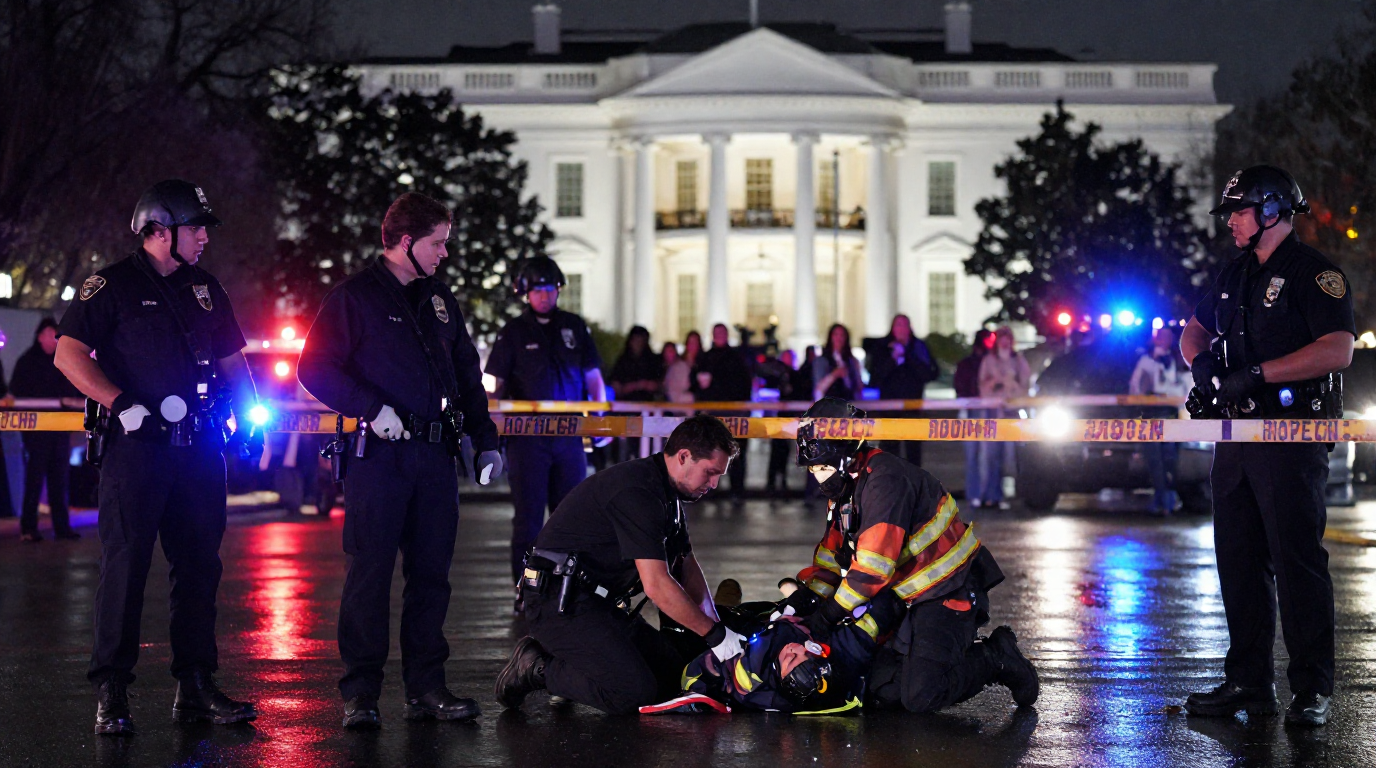
A person standing nearby got hurt when shots were fired close to a security post at the White House in Washington, D.C. An individual carrying a weapon clashed with agents from the U.S. Secret Service. With police arriving fast, the zone went into full closure as teams moved in to take control. Though not part of the confrontation, the wounded civilian was caught in the chaos that unfolded suddenly.
A bullet struck a bystander while police traded fire with a suspect. Nearby when shots rang out, the person had been standing close to where things unfolded. Investigators now piece together the sequence, tracing the path of the round. What led to the misfire is part of what they’re examining.
A lockdown stayed in place near the White House as officials worked through the incident. With federal, state, and local teams involved, the reaction unfolded step by step.
Where the Incident Happened
A sudden disturbance happened just beside a guard post near the edge of the White House grounds. That entry point sits inside a restricted section meant to regulate who gets onto federal land.
Standing guard at key spots, Secret Service agents watch activity while staying ready to act. When the event happened, personnel were working the post.
A figure drew near the barrier, stepping closer to the officers. From there, a weapon came into play, sparking shots exchanged between the individual and police.
Sequence of Events
Early details from officers suggest things unfolded like this:
- A man arrived at a White House security checkpoint
- Into the street he stepped, facing the officers ahead. Their presence marked the moment without words spoken between them
- A firearm was taken out
- Bullets flew in the direction of law enforcement personnel
- Officers returned fire
- The suspect was shot
- A person nearby got hurt
- Faster than expected, emergency crews showed up
- Later that night, the person under suspicion ended up at a medical center – then passed away. Hospital staff confirmed death followed soon after arrival
Right now, the order of events stays unclear. From camera clips to what people said, each detail helps piece together what happened when. Physical clues also play a part in checking movements and moments.
Bystander Injury
A person standing close by happened to be there when things went wrong at the gate. Shots fired back and forth led to harm taking place right then.
A single bullet led to the harm, though authorities haven’t said where it came from. Could’ve been fired by the person police were chasing, or maybe one of the officers responding. Details remain unclear as checks continue into who actually pulled the trigger.
An ambulance carried the hurt individual away for care. Officials shared nothing more on who they are or how bad it is.
This section of the inquiry is now under distinct scrutiny by authorities.
Law Enforcement Responds Quickly
Firing broke out, then agents moved in fast. Once the shooter started at the gate, they shot back without delay.
Out near the fence line of the presidential residence, extra personnel arrived on scene. With barriers set in place, access tightened by the hour.
Inside the White House grounds, movement shifted quickly. Gates at every entrance shut tight. A quiet order sent staff into protected wings. Outside access froze without warning.
Some roads close to the White House shut down. To manage entry on nearby blocks, officers took up positions at key points.
Agencies Involved
Several agencies responded to the incident:
- Secret Service of the United States
- Federal Bureau of Investigation (FBI)
- Bureau of Alcohol, Tobacco, Firearms and Explosives (ATF)
- Metropolitan Police Department
Right away, the Secret Service handled securing the scene. Following that, the FBI stepped in to explore any national-level concerns. The weapon itself is now under scrutiny by the ATF. Meanwhile, local officers helped manage movement around the location.
Secret Service Functions
Inside the fence line, guards watch who comes and goes. Protection of the presidential residence falls to federal agents trained for emergencies. At entry points, personnel stay alert for anything unusual. When danger appears, response teams move fast.
When the gun went off, that is when police moved in. Because such places have strict rules, their actions followed what must be done during danger there.
Right away, agents locked down the scene while helping gather evidence. Moments later, they began working alongside investigators to piece things together.
FBI Investigation Role
Federal agents stepped into the probe soon after things unfolded. When matters touch official buildings or those working under federal authority, such work falls within their role.
Footage from cameras sits alongside notes taken by agents who spoke to people nearby. One piece at a time, each clue gets checked carefully after being gathered where it happened.
Working alongside the Secret Service, the FBI pieces together moments leading up to the incident. Their focus shifts toward tracing the suspect’s path to the checkpoint, then examining actions taken prior to shots being fired.
Looking into the person’s past, agents check old police records. Because details matter, they examine encounters with officers before. Near secure zones, anything unusual gets another look. Past behavior around those spots could explain current concerns.
Suspect Information
A young man, 21 years old, stands as the person of interest. Police files indicate he has crossed paths with officers before.
Earlier run-ins show the man was held close to off-limits government sites. Each time, entry into secured spots either happened or came close.
Checking mental health files now, investigators take a closer look. Nothing confirms why it happened just yet.
White House Security System
Hidden behind layers of protection, the White House relies on the Secret Service to run its security setup. Not just walls but also constant camera watch plus entry screenings form part of it. From distance checks to close monitoring, each piece works without drawing attention.
Along the outer edge, checkpoints appear at intervals for monitoring entry. Right away, guards posted there act when danger shows up.
Security begins at the edge of government land, where controls block unwanted access. Entry happens only after checks confirm permission exists. Risks get reduced through constant monitoring in place. Unauthorized attempts trigger responses built into operations. Protection stays active because procedures run without pause.
Lockdown Procedure
A lockdown was activated during the incident.
During the lockdown:
- Fences shut down one by one. Gates sealed without warning. Paths stopped leading anywhere. Exits vanished into thin air
- Exit points were closed
- Fences blocked paths through the zone. Roads required passes to cross. Guards watched every entrance closely. Only certain people moved freely past checkpoints. Signs warned against stepping off marked routes
- People working there got taken into safe spaces
- Roads near the White House were closed
- Armed officers secured key positions
Still under restriction, the zone stayed closed off till cleanup finished.